

 support@kratoman.eu


-
Home

- Reading room
Reading Room – Kratom Knowledge
Guarana: Separating Facts from Marketing | Kratoman
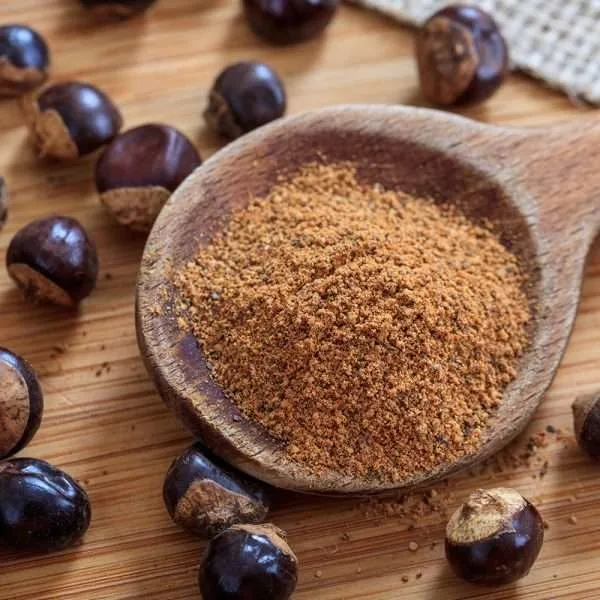
🌱 Guarana: Facts and Marketing Claims
Guarana is a powerful botanical known for its naturally high caffeine content. Extracted from dried seeds, this energizing green powder is widely appreciated for its ability to support both mental clarity and physical performance.
Guarana Extract: Composition, Origin & Properties | Kratoman

Guarana Extract: Composition and Origin
Guarana extract is a natural stimulant with a long history of use in traditional medicine. It has gained global popularity for its energizing and revitalizing properties. Rich in caffeine and antioxidants, guarana is used today in a variety of supplements and health products. But what exactly is guarana and why do so many people choose it?
What Is Guarana?
Guarana (Paullinia cupana) is a tropical climbing plant native to the Amazon basin, especially Brazil and Paraguay. Its seeds, similar in size to coffee beans, are harvested and processed into a fine brown powder packed with natural stimulants. The fruit’s appearance is striking: once ripe, its skin bursts open to reveal seeds that resemble a human eye.
Origin and Traditional Use
The name "guarana" comes from the Guarani word "warana". This sacred plant was traditionally used by Amazonian tribes for its healing and energizing effects. They chewed the seeds or brewed them into tea to combat fatigue, hunger, and headaches.
In the early 1900s, guarana entered the mainstream market in Brazil. Dr. Luis Pereira Barreto used the seeds to create soft drinks, including a popular guarana soda and even a sparkling "champagne" beverage.
Kratom Preparation Methods Explained | Kratoman
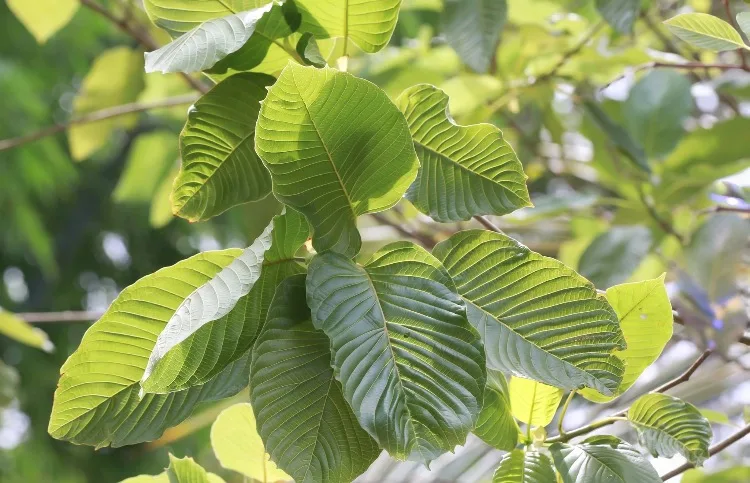
🌿 Kratom Preparation Methods: A Collector's Overview
Kratom (Mitragyna speciosa) is a tropical botanical with a long history of traditional use in Southeast Asia. At Kratoman, we have been working with Kratom powder and leaves for several years as collectors and suppliers. In this article, we share practical observations about common preparation methods and what we have noticed over time — strictly for educational purposes.
Kratom Alkaloids Explained: Mitragynine & More | Kratoman

🌿 Kratom Alkaloids: Mitragynine and Botany
Kratom (Mitragyna speciosa) is a tropical tree native to Southeast Asia. For centuries its leaves have been used traditionally. At Kratoman, we have been carefully selecting and studying Kratom botanical specimens for several years. In this article we share a factual overview based on scientific literature and our practical experience.
Kratom and Withdrawal Research: What Studies Examine

Kratom and Dependence – A Balanced, Practical Overview
Kratom (Mitragyna speciosa) is a complex tropical plant that has been used traditionally in Southeast Asia for centuries. In Europe the discussion is often polarized. At Kratoman we have been working with kratom daily for over 5 years — evaluating hundreds of batches, speaking with collectors, and observing real patterns.
In this article we share our practical experience and a sober perspective on kratom and dependence — without hype and without false promises.
Kratom COA: How to Read a Lab Analysis | Kratoman

🌿 Finding and Reading COA Documents
At Kratoman, we place the highest priority on the quality of our botanical specimens. That is why we work exclusively with independent, accredited laboratories that provide professional Certificate of Analysis (COA). In this article, we explain what a COA is, which parameters we test, and why this matters to you as a collector.
Is Kratom Legal in Germany? 2026 Legal Status Explained | Kratoman

⚖️ Is Kratom Legal in Germany? Legal Status 2026
Some plants make life easy for the law: tomato → food, file it, done. And then there is kratom. At Kratoman we are asked almost daily whether you can buy Kratom legally – so here is the legal picture, sober, sourced and drama-free. Kratom (botanically Mitragyna speciosa) is something like the Schrödinger's plant of German law: simultaneously not banned and not approved, neither food nor medicine. A tidy-minded bureaucrat probably gets hiccups just thinking about it. (Status: June 2026)
Kratom Colors Explained: Red, Green, White & Gold | Kratoman
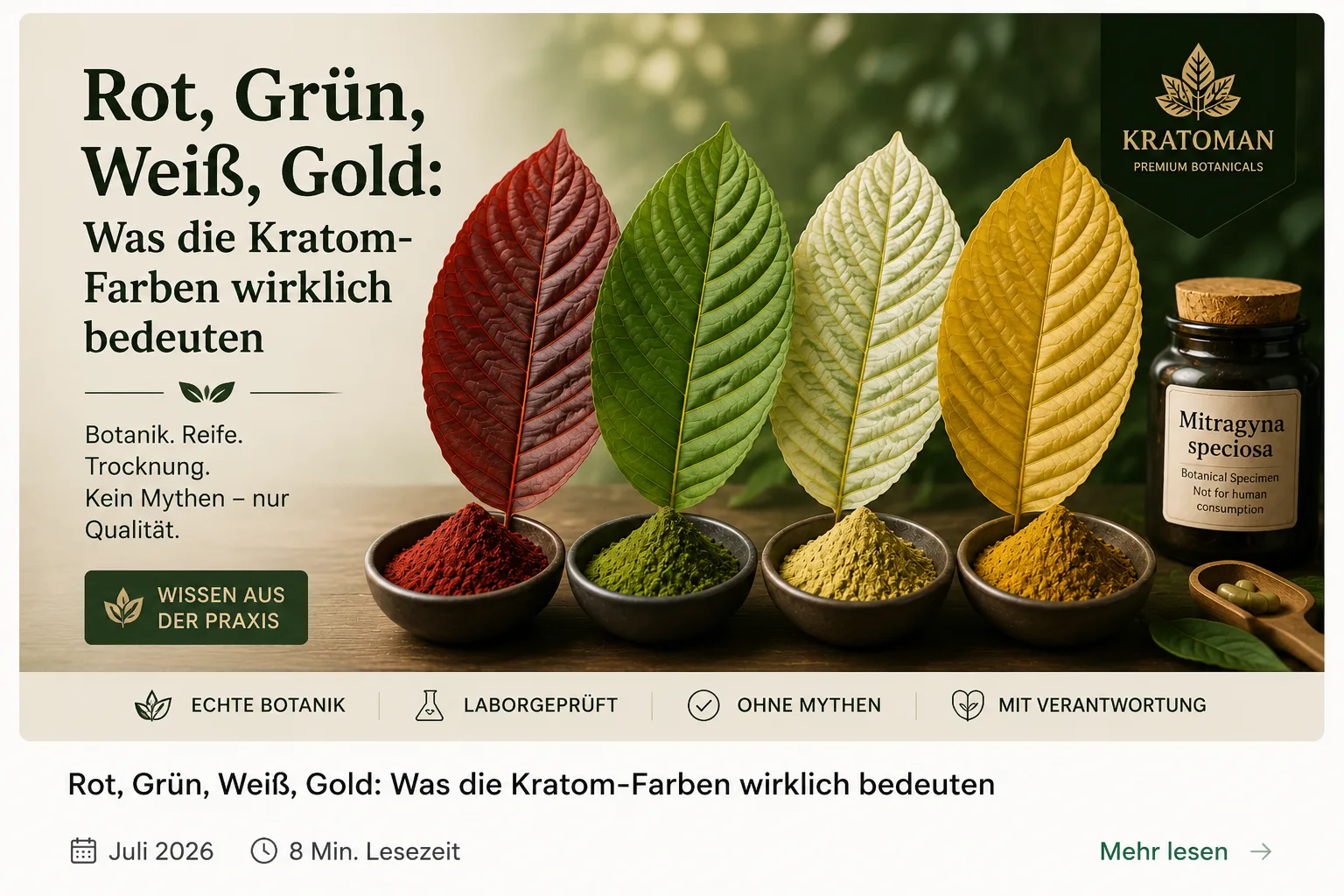
🌈 Red, Green, White, Gold: What Kratom Colors Really Mean
From the Kratoman boutique bench · Updated: July 2026 · Reading time: approx. 8 minutes
Seeing a kratom variety list for the first time feels a bit like standing in front of a traffic light with a collector's itch: red, green, white – and then gold on top. Almost like belt colors in karate. 🥋 But there is no secret science behind it, just plain botany: the color of the leaf vein, the ripeness at harvest, and the drying method. At Kratoman we treat our botanical specimens the way a tea or coffee sommelier treats their varieties – and that is exactly how we explain the colors here: honestly, without myths, without promises.
Maeng Da Kratom Explained: The Truth Behind the Famous Name
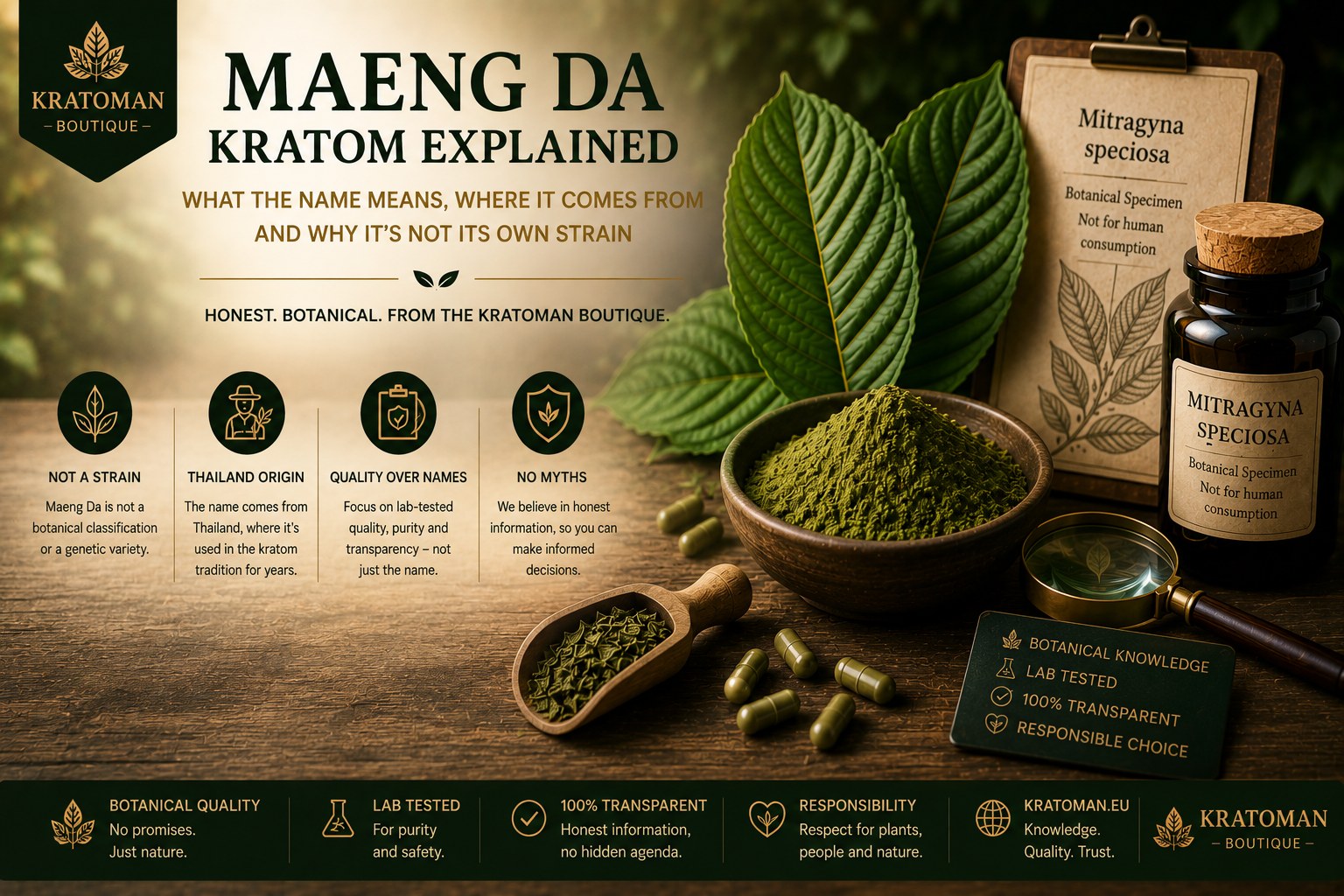
👑 Maeng Da Kratom Explained: The Truth Behind the Famous Name
From the Kratoman boutique bench · Updated: July 2026 · Reading time: approx. 7 minutes
Few names appear as often in the kratom world as Maeng Da. It sounds like premium, like insider knowledge, like „the best of the best“. But what is really behind it – a secret strain, a region, a marketing trick? At Kratoman we clear up the myths: honestly, botanically, without promises.
Elephant Kratom: Where the Name Comes From and What Makes It Special
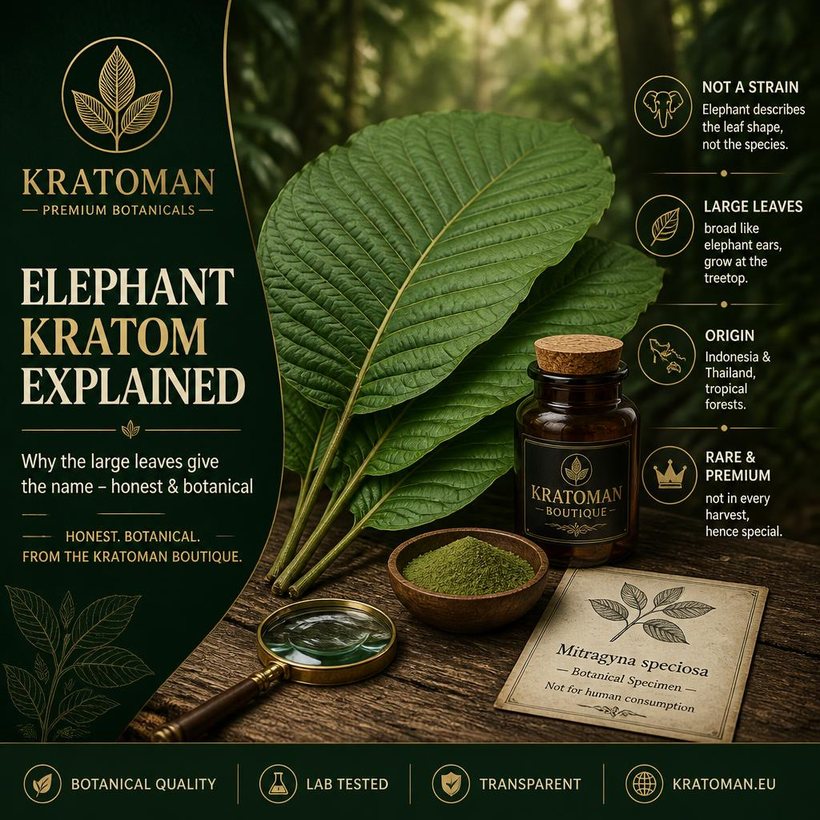
🐘 Elephant Kratom: Where the Name Comes From and What Makes It Special
From the Kratoman boutique bench · Updated: July 2026 · Reading time: approx. 6 minutes
Some kratom names sound like marketing – Elephant is not one of them. Behind the name is a very concrete botanical feature: the strikingly large leaves that resemble elephant ears. 🐘 At Kratoman we explain where the name comes from, what makes the big leaves botanically special, and how Elephant fits into our range – honestly and without promises.

